How Hydroponic Water Chillers Prevent Root Rot and Boost Crop Yields in Summer
Why nutrient solution above 22 °C triggers dissolved-oxygen collapse and Pythium root rot, the optimal root-zone temperature by crop, and how to size a commercial hydroponic water chiller for DWC, NFT and vertical farms.
In commercial hydroponic farming, water is the primary vessel for nutrition, oxygen and root development. Unlike soil-based farming, where earth buffers temperature swings, a hydroponic system leaves the crop root zone directly exposed to ambient climate shifts. As summer temperatures rise, nutrient solution temperatures spike quickly — and set off a cascade that commercial growers cannot afford.
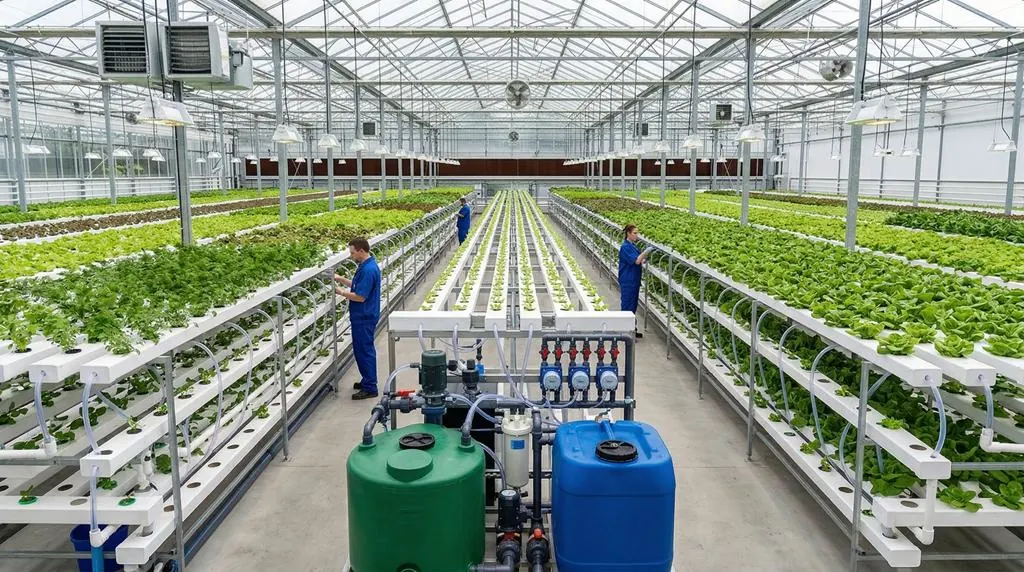
If you run a Deep Water Culture (DWC) or Nutrient Film Technique (NFT) system, water temperature control is not an optional luxury — it is a core production requirement. This guide covers the science of nutrient solution cooling, the optimal temperature targets by crop and system, and how a commercial hydroponic water chiller protects your investment and keeps yields consistent year-round.
1. Why High Water Temperature Is the Silent Killer of Hydroponic Crops
When nutrient solution rises above 22 °C (72 °F), two biological problems happen at the same time: dissolved oxygen depletion, and explosive pathogen reproduction.
The Dissolved Oxygen Collapse
Water temperature and oxygen-holding capacity have an inverse relationship. Cold water holds high levels of dissolved O₂, enabling vigorous root respiration and nutrient uptake. As water warms, that oxygen escapes into the atmosphere.
- At 20 °C (68 °F), water holds roughly 9.1 mg/L of dissolved oxygen — the ideal range for most crops.
- At 30 °C (86 °F), dissolved oxygen capacity drops below 7.5 mg/L — a loss of more than 17% of available oxygen.
Without sufficient oxygen, roots suffer asphyxiation and shut down the active transport mechanisms they need to absorb nitrogen, phosphorus, potassium and calcium. The plant is not short of nutrients in the reservoir — it is physically unable to take them up.
The Rise of Pythium and Algae
Warm, oxygen-depleted water is the ideal environment for anaerobic waterborne pathogens — most notably Pythium spp., the organism behind root rot. Pythium zoospores thrive above 24 °C (75 °F), invading weakened root tissue, turning healthy white roots into brown sludge, and destroying an entire commercial harvest in a matter of days. High temperatures simultaneously accelerate green algae blooms in channels and gullies, consuming nutrients and fouling irrigation lines.
Key takeaway for commercial growers. No amount of oxygen diffusers, air pumps or chemical root sterilizers compensates for high water temperature. Cooling the liquid at the source, with a dedicated water chiller, is the only sustainable defense against Pythium — the other measures treat symptoms, not the cause.
2. Optimal Hydroponic Water Temperatures by Crop & System
To maximize photosynthesis, crop vigour and nutrient uptake, commercial growers target a baseline nutrient temperature of 18–20 °C (65–68 °F). Specific crop categories carry subtle variations.
| Crop Type | Ideal Root-Zone Temperature | Key Risk Above 22 °C (72 °F) |
|---|---|---|
| Hydroponic lettuce & greens | 17–20 °C (62–68 °F) | Tipburn, early bolting, bitter flavour development |
| Strawberries | 18–20 °C (64–68 °F) | Stunted root expansion, sharp decline in Brix (sweetness) |
| Tomatoes & vine crops | 18–21 °C (65–70 °F) | Blossom end rot, reduced fruit set and calcium absorption |
| Medicinal & high-value crops | 18–20 °C (65–68 °F) | Severe Pythium outbreak, root dieback, loss of essential-oil yield |
DWC vs NFT Cooling Dynamics
- DWC (Deep Water Culture) holds large water volumes. It is slow to heat up, but once a warm reservoir is established it takes substantial cooling capacity to pull temperatures back into the safe zone.
- NFT (Nutrient Film Technique) runs a thin film of water through exposed gulley channels. It heats up rapidly as greenhouse air warms, and needs near-constant inline cooling.
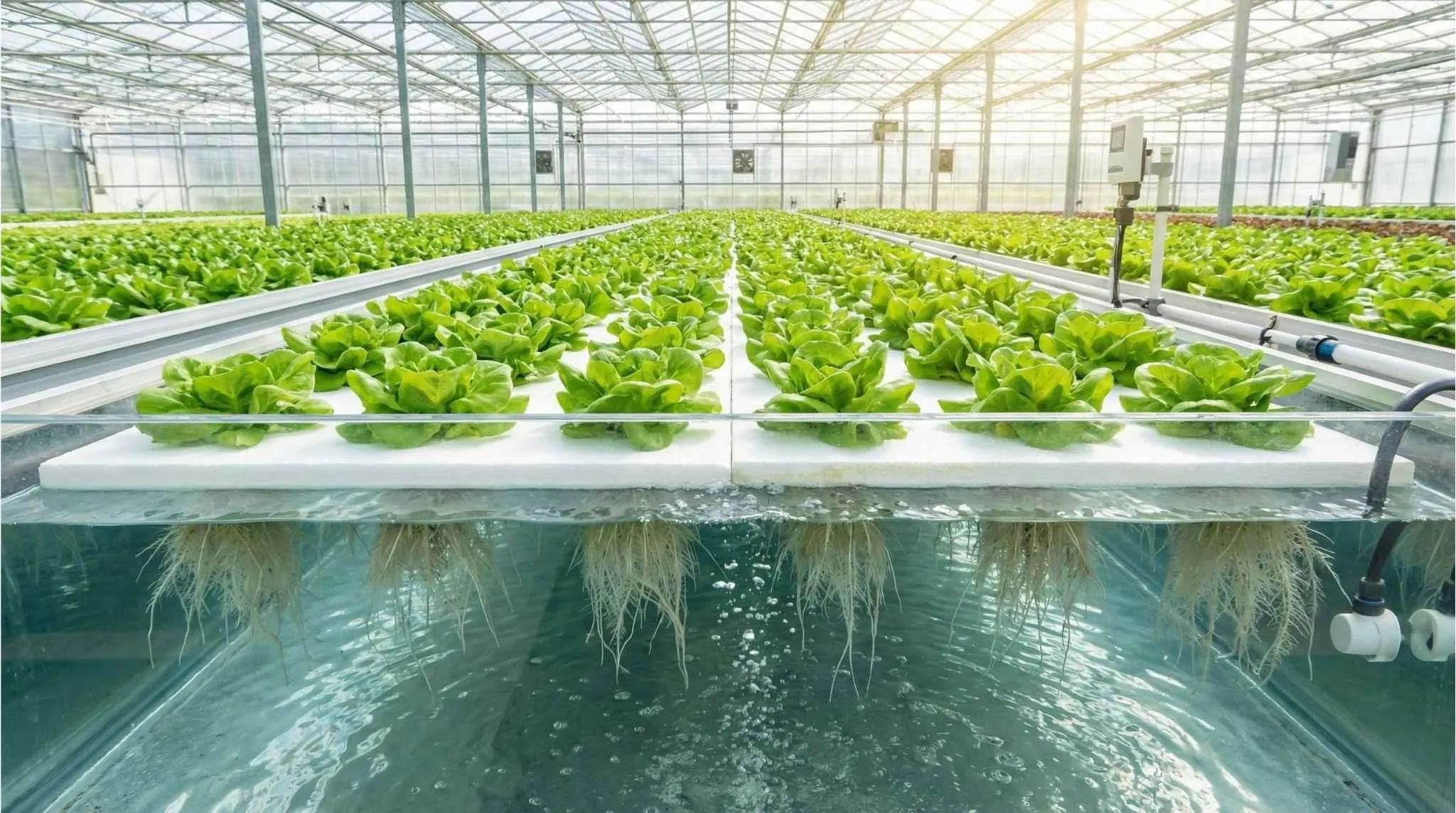
The system architecture decides where the heat load comes from — and therefore what size chiller you need.
3. Anatomy of a Commercial Hydroponic Cooling Loop
A commercial hydroponic water chiller works as a closed-loop refrigeration unit integrated directly into the farm's fertigation and circulation setup.
The loop runs: growing channels and benches → return flow to the main sump or reservoir tank → circulation pump → chiller unit with a corrosion-resistant heat exchanger → cooled solution delivered back to the crop at a precise inflow temperature.
Critical Components in a Hydroponic Chiller
- Titanium or 316L stainless heat exchanger. Hydroponic nutrient solutions are mildly acidic (pH 5.5–6.5) and loaded with mineral salts. Standard copper exchangers corrode quickly and leach heavy metals into the solution — into the plant. A pure titanium or high-grade stainless coaxial exchanger is essential.
- Precision microprocessor / PID controller. Holds nutrient temperature within ±0.5 °C, avoiding thermal shock to root structures.
- High-COP scroll compressor. Delivers continuous cooling power at low energy cost during peak summer ambient, when the chiller is working hardest.
4. Sizing a Water Chiller for Your Hydroponic Operation
Correct sizing cools the system efficiently without overloading the farm's electrical infrastructure. Sizing is governed by three things: total system volume, ambient heat gain, and heat contributed by the pumps themselves.
The Thermal Sizing Formulas
In imperial units, required cooling capacity is:
BTU/hr = total gallons of solution × 8.33 × desired temperature drop (°F) ÷ pull-down hours
In metric units — the form most of our customers outside the US work in — the same calculation is:
kW = litres of solution × 4.186 × temperature drop (°C) ÷ (3600 × pull-down hours)
Both give the same answer; pick whichever matches your instrumentation. For a full worked example — reservoir volume, heat-load calculation, expected cooling time and the real-world derating that applies above 32 °C ambient — see our case study on sizing a chiller for a 1,200-gallon aeroponic reservoir.
- Safety factor: always add 20–25% additional cooling capacity to cover heat radiated by water pumps and grow lighting (HPS or LED), and regional summer heatwaves.
- Do not size on flow rate alone. Circulation flow governs how fast water cycles through the unit; cooling kW determines how quickly heat is actually removed. A high-flow pump cannot compensate for an undersized chiller.
Regions Where Water Cooling Is Mandatory
If your operation sits in a high-ambient region, a dedicated chiller is the difference between a summer harvest and a summer write-off:
- Middle East & GCC (UAE, Saudi Arabia, Qatar) — ambient summer temperatures exceed 45 °C (113 °F); greenhouse air cooling alone cannot hold water below 20 °C.
- US Sunbelt (California, Arizona, Texas, Florida) — sustained solar radiation rapidly heats shallow NFT channels and indoor reservoirs.
- Southeast Asia & Australia — high relative humidity combined with elevated night temperatures blocks natural evaporative cooling, so reservoirs never get a cool reset overnight.
If your site currently relies on whole-house air conditioning or pad-and-fan cooling to drag reservoir temperature down, you are paying to condition several thousand cubic metres of air in order to cool a few hundred litres of water. Our comparison of root zone cooling vs whole-greenhouse air cooling sets out why cooling the roots directly does the same job for 40–70% less energy.
5. Protecting Your Yields and ROI
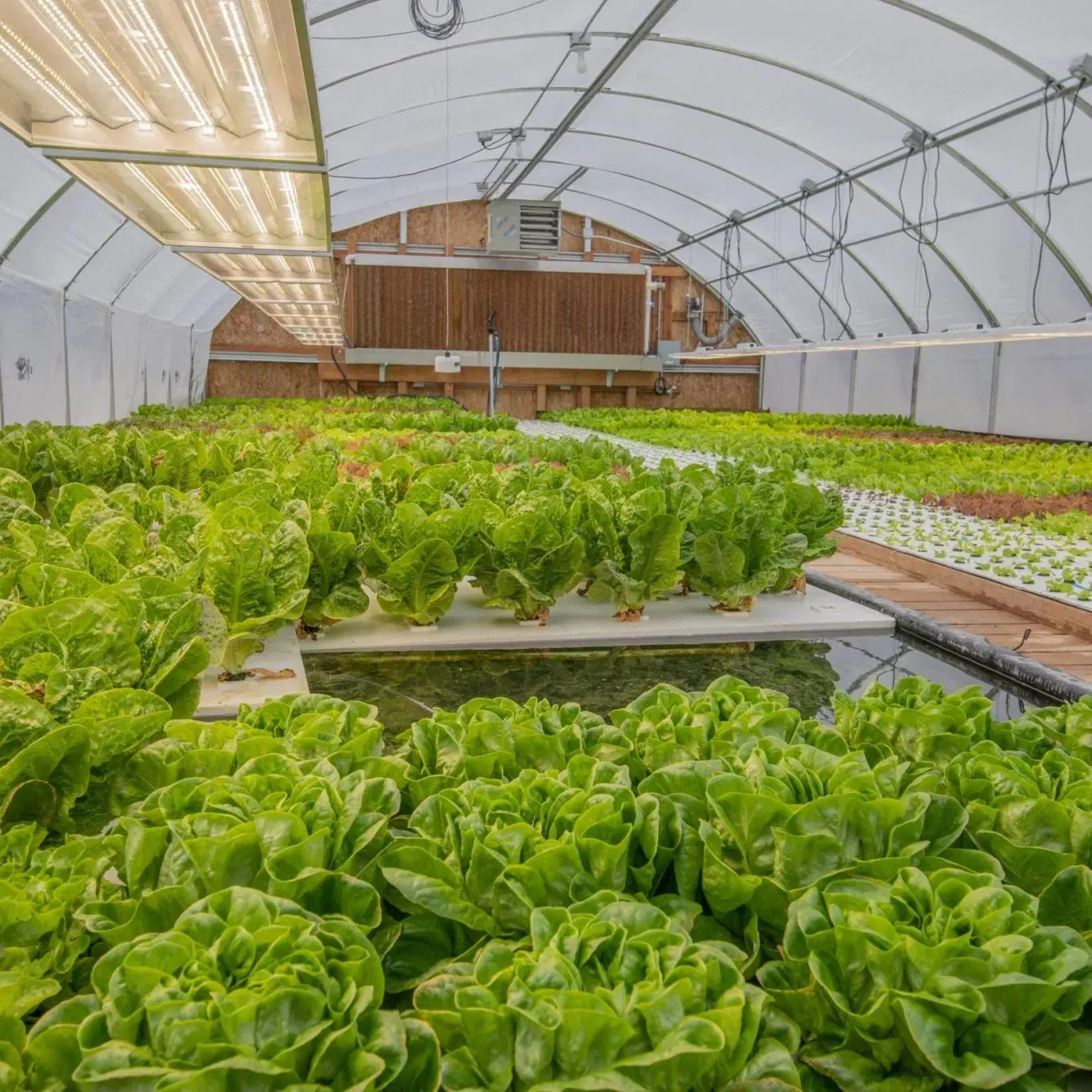
Investing in a correctly sized commercial hydroponic water chiller is one of the highest-ROI decisions a commercial grower can make. By holding nutrient solution inside the optimal 18–20 °C window, operators eliminate Pythium root rot risk, maintain peak dissolved oxygen levels, and deliver consistent yield quality regardless of what the weather does outside.
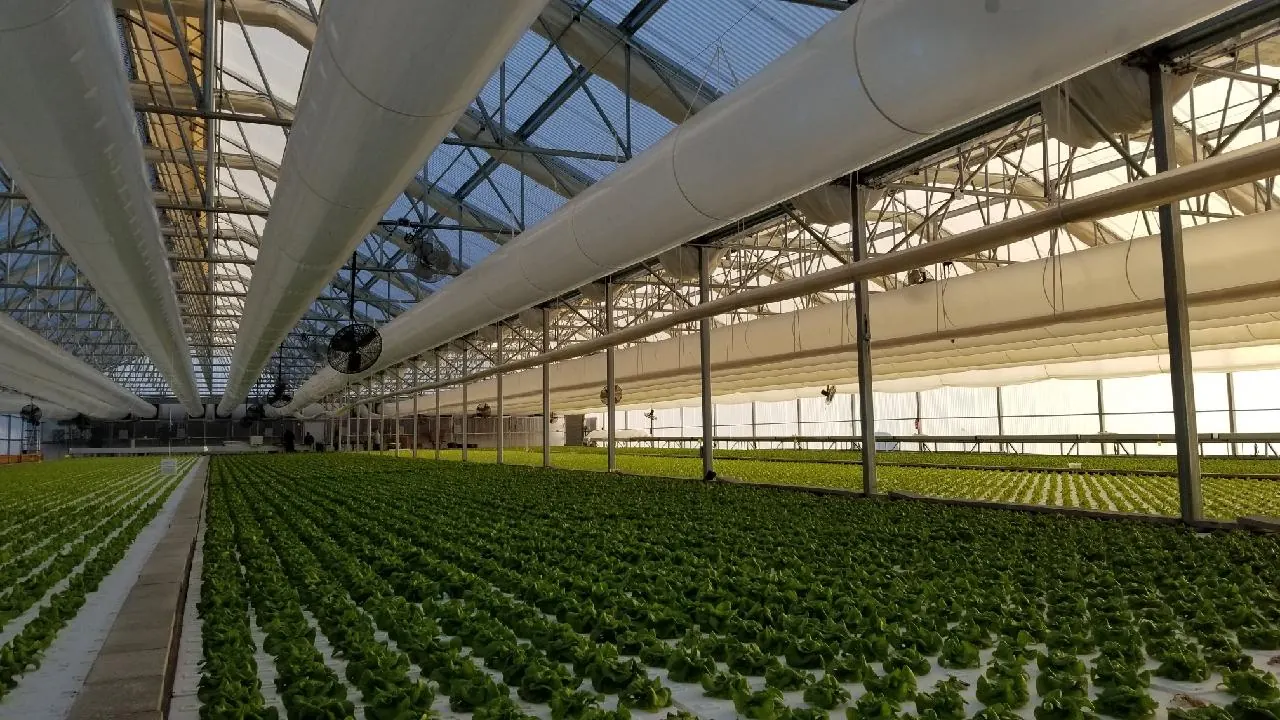
The payoff compounds: stable root-zone temperature means predictable nutrient uptake, predictable growth rates, and a harvest calendar you can actually commit to buyers — which matters more in a commercial supply contract than any single season's peak output.
For growers specifying the wider cooling plant — larger reservoirs, multi-zone greenhouses, or combined process and HVAC duty — the same engineering applies at scale across our industrial water chiller range.
Need a custom cooling solution for your farm? Our thermal engineers specialize in titanium chillers and heat exchangers built for commercial hydroponics and vertical farms. Send us your total solution volume, the hottest ambient your greenhouse sees, and your target root-zone temperature — contact Delin for a free chiller sizing and engineering consultation.