Commercial Aquarium Chiller: Water Features for Hotels, Malls & Restaurants
How to cool the large, round-the-clock aquarium displays found in hotel lobbies, shopping malls, themed restaurants and ocean-themed commercial spaces — and how to choose the chiller by the space it has to fit.
A large aquarium changes the feeling of a commercial space in a way that few other features can. Hotel lobbies, shopping malls, themed restaurants, children's play zones and ocean-themed commercial venues increasingly use big displays to create an experience guests remember — and to keep them in the building longer. But a commercial display is not a home fish tank with a bigger price tag: it is a piece of building infrastructure that has to run every day, all day, for years, inside a space that was designed around people, not machines.
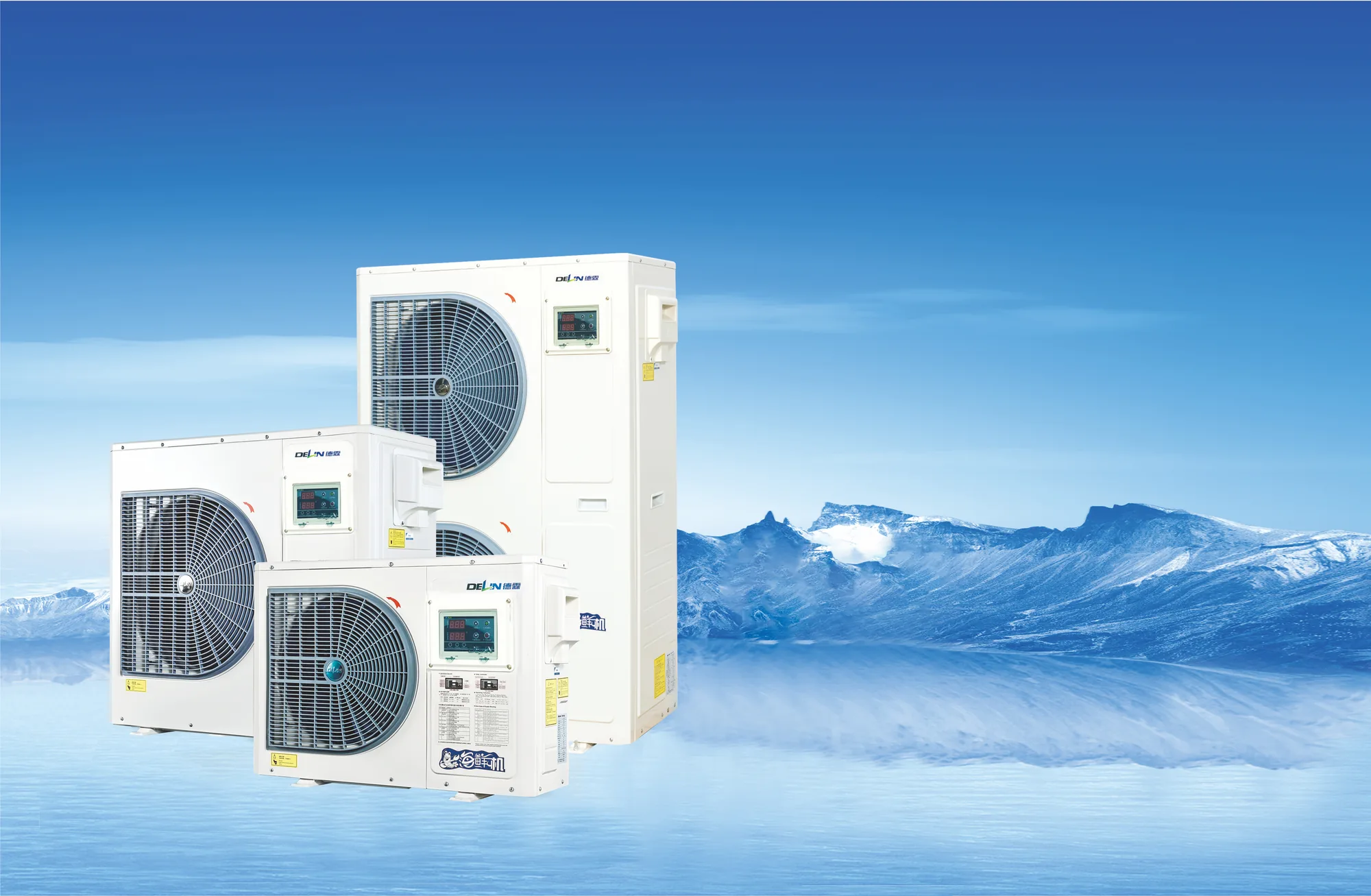
This guide explains how commercial aquarium displays differ from residential tanks, why the installation space often decides the machine, and how Delin's range of structural configurations helps aquarium engineering companies fit reliable cooling where it has to go.
How Commercial Displays Differ from Home Tanks
Water features in commercial projects face a different set of demands than any residential aquarium:
- The water volume is much larger. A lobby display or mall aquascape can hold thousands to tens of thousands of litres, so the cooling load is genuinely industrial.
- The equipment runs continuously. The display is the centrepiece of the business — it cannot be switched off overnight, and it must stay alive through heat waves, busy weekends and holiday seasons alike.
- Installation space is limited and awkward. The machine room is often a tight corridor, a ceiling void, a basement corner or a space behind a decorative panel — nowhere near as generous as a plant room.
- Noise matters. A compressor that hums loudly ruins a quiet lobby or a fine-dining room, so low operating sound is a design requirement, not an option.
- The equipment must be hidden. Commercial displays are about atmosphere; visible machinery and pipe runs break the illusion. Cooling plant has to disappear into the building fabric.
When an aquarium engineering company designs for these conditions, the first question is rarely "how many kW" — it is "what machine will fit the space, and how do we keep it quiet and serviceable once it is hidden away."
Choosing the Chiller by the Space, Not Only by the Capacity
A commercial chiller is chosen for a specific enclosure, so the physical configuration of the machine matters as much as its cooling power. The Delin catalog includes a range of structural forms so the equipment can be matched to where it must live:
- Long, low-profile (slim) units for narrow equipment corridors and low ceiling voids where height is the constraint.
- Horizontal units that fit under display tanks, behind counters or in low horizontal spaces.
- Top-discharge units that push condenser air straight up — the right choice where side clearances are tight and warm air can be ducted or allowed to rise away.
- Side-intake / multi-intake configurations that draw air from available faces and suit installations built into walls or enclosures.
Whatever the form, the machine has to do its job inside its enclosure without starving itself of condenser airflow. Planning the air path — where cool air enters and where hot discharge air goes — is part of sizing a commercial installation, and it is exactly the kind of guidance Delin provides with every project.
What a Commercial Display Chiller Must Deliver
The best commercial machine is the one that makes the aquarium engineering company look good for years. From Delin's experience supplying display projects, that means five things:
- Seawater-safe materials where the display is marine. Many high-end and ocean-themed displays are saltwater or mixed. A pure Grade 2 titanium heat exchanger resists seawater corrosion and releases no metal ions, so corals and marine fish stay safe and the machine lasts.
- Reliability under continuous duty. Industrial-grade Copeland / Emerson / Panasonic compressors and over-temperature and overload protection keep a round-the-clock display running through every season.
- Precise, stable temperature (±0.5 °C). A microcomputer controller holds the display inside its band across a working range of +5 °C to +35 °C — the stability a large, well-stocked system needs to stay healthy.
- Low noise (< 55 dB). Quiet enough for a lobby, reception or dining room even when the plant is only a partition away.
- Easy maintenance. Accessible service points, an anti-corrosion casing for humid spaces, and a 12-month factory-backed warranty — because once the equipment is hidden behind panelling, servicing it needs to be quick and simple.
Capacities from 2.8 kW to 85 kW (1–30 HP), with 220 V/50 Hz single-phase or 380 V/50 Hz three-phase supply options, cover everything from a single large display to multiple tanks running on one circuit.
Built for Aquarium Engineering Companies
The most valuable partner for this market is the aquarium engineering company — the firm that designs and installs the whole water feature and specifies every component. Delin supports these companies as the factory behind the machine:
- Wholesale and project pricing with an MOQ of a single unit, so a company can quote one lobby display or a chain of mall installations without inventory risk.
- Custom configurations to fit unusual machine spaces, with standard models shipping in 15–25 days and custom builds in 25–40 days.
- Engineering support on every project — heat-load calculation, air-path and enclosure guidance, and installation advice, so the specified machine fits and performs as drawn.
For the marine and reef side of commercial displays, see our marine reef & coral aquarium chiller guide; for selection and heat-load math that applies to any aquarium, the ornamental fish aquarium chiller: selection & sizing guide is a practical reference. Our seafood constant-temperature machines share the same titanium platform that keeps commercial displays reliable.
Tell us the water volume, the type of display (fresh, saltwater or mixed), the room and equipment space available, the noise limit and your target temperature. Delin will recommend the structural configuration and capacity, and quote the project.