Fish Hatchery & Nursery Chiller: Constant Temperature Water for Seedling Rearing
Why fish, shrimp, crab and bivalve hatcheries and nursery tanks need dedicated constant-temperature cooling — and how a Delin DL-E chiller holds ±0.5°C with a pure titanium heat exchanger.
Aquaculture is not only about large open ponds. In the seedling stage of high-value species, the water volume is smaller but the demand for temperature stability is far higher. A few degrees of drift can decide whether a batch of larvae survives, feeds, and grows — which is why a growing number of hatcheries and breeding farms treat water temperature as their most important environmental control.
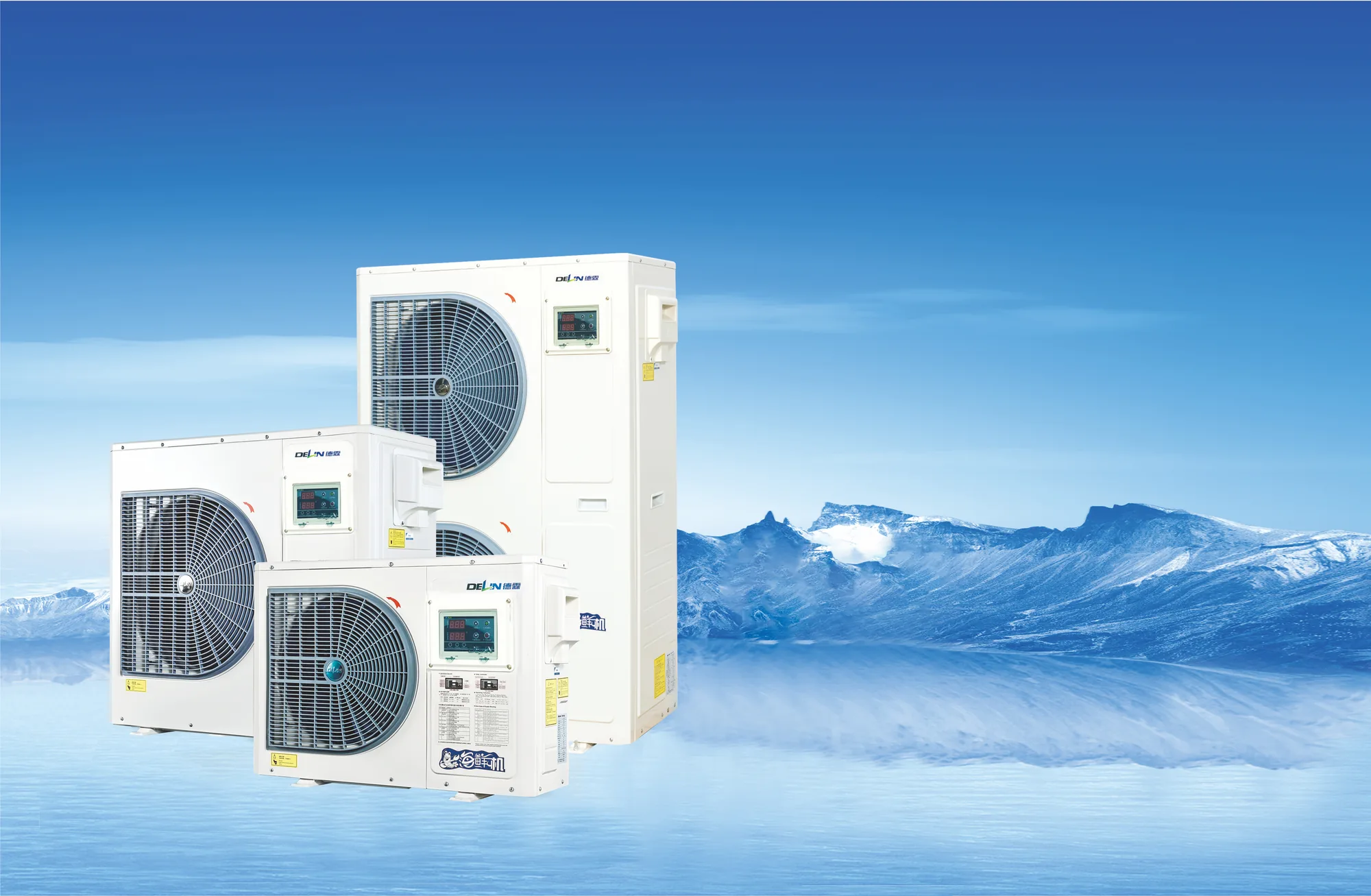
This guide explains where dedicated temperature control matters in seedling rearing, why nursery tanks are a natural fit for an independent chiller, and how a Delin constant-temperature machine meets the duty.
The First Weeks Decide the Whole Crop
In fish, shrimp, crab, bivalve and sea-cucumber farming, the most fragile period is the start. Larvae and post-larvae have little thermal tolerance, high metabolism, and no way to escape a tank that is too warm or too cold. Temperature drives three things at once in a hatchery:
- Survival. Sudden swings stress larvae and trigger disease before the immune system can respond.
- Growth and feeding. Each species converts feed into body mass fastest inside its preferred temperature band; outside it, appetite drops and growth stalls.
- Uniformity. A stable, evenly cooled tank produces batches of more uniform size — worth more at sale.
Water that is a few degrees too warm also holds less dissolved oxygen, exactly when dense nursery stocking needs more of it.
Where Seedling Rearing Needs Dedicated Temperature Control
The same problem appears across almost every high-value seedling operation:
- Fish fry and juvenile rearing — tropical and marine fry held at a stable temperature through weaning.
- Shrimp and prawn hatcheries — post-larvae and nursery tanks where a stable set-point protects the most valuable weeks of the cycle.
- Crab and lobster seedling rearing — zoea and juvenile stages that are highly sensitive to swings.
- Bivalve and sea-cucumber seedling — hatcheries and larval tanks for shellfish and holothurian culture.
- Ornamental fish breeding — indoor breeding rooms for species raised to be sold alive.
- Research and seed-production stations — where trials demand repeatable water temperature.
Each of these runs a relatively concentrated body of water at high value per cubic metre, and each runs its temperature equipment for long, continuous hours.
Why Nursery Tanks Suit an Independent Chiller
Unlike a large open grow-out pond, a nursery or hatchery system is a natural candidate for a dedicated chiller rather than a pond-scale solution:
- Water is concentrated. Compact tanks and raceways mean a smaller chiller can control the whole loop, so the machine itself is affordable.
- Value per litre is high. Seed and larvae are the most expensive product on the farm — protecting them justifies reliable equipment.
- Temperature tolerance is tight. Nursery protocol demands precise control around a set-point, exactly what a digital chiller controller provides.
- Duty is continuous. Hatcheries run day and night; the machine must be built for months of round-the-clock operation, not seasonal use.
What the Machine Must Do in a Hatchery
Whatever species you rear, the chiller in a seedling room has four jobs: pull the heat load down within the protocol window, hold the set-point without overshoot, survive saltwater or brackish contact without corroding, and keep working continuously through the whole rearing season. The first two are a matter of sizing and controller accuracy; the last two are a matter of materials and build quality.
The Constant-Temperature Machine Delin Builds for This Duty
Delin's DL-E constant-temperature machines — the same platform as our seafood constant-temperature machines and aquaculture water chillers — are built for hatchery and nursery duty, from 2.8 kW to 85 kW (1–30 HP). Three things matter most to seedling farmers, and each is engineered into the machine.
1. Precise temperature control (±0.5 °C). A microcomputer controller with auto-diagnosis holds water within half a degree of set-point across a working range of +5 °C to +35 °C. For a nursery protocol that demands 24–28 °C for tropical fry, or ~28–30 °C for shrimp larvae, the machine does not drift — it holds the number you set.
2. High energy efficiency over long running hours. A hatchery chiller runs almost continuously. DL-E machines pair efficient Copeland/Emerson/Panasonic compressors with high-efficiency heat exchange so the unit delivers its cooling without wasting power across months of operation — lower running cost on a machine that never sleeps.
3. Stable, durable quality for 24/7 duty. Seedling systems cannot afford unplanned stops. DL-E units use industrial-grade components, a pure Grade 2 titanium heat exchanger that resists seawater corrosion and never releases metal ions into the water, an anti-corrosion casing for humid, salt-laden rooms, and over-temperature and overload protection. Every titanium coil is 100% hydrostatically tested before the unit ships, and each machine carries a 12-month warranty backed by the factory that built it.
Low noise matters in indoor rooms too: the DL-E series runs below 55 dB, quiet enough to sit beside nursery tanks or a breeding room.
Sizing a Nursery or Hatchery System
Correct sizing depends on system water volume, stocking density, ambient temperature, and your target set-point — not tank size alone. A compact breeding-room circuit may need only a 1–3 HP machine, while a commercial shrimp or marine-fish hatchery steps up to 30 HP or runs several units in parallel. For worked examples with real heat-load math, see our shrimp hatchery chiller sizing guide and the ornamental fish aquarium chiller guide.
Send us your tank or raceway volume, water type (fresh, brackish, or seawater), stocking density, and target temperature. Our engineers will calculate the heat load and recommend the exact capacity — and because Delin is the manufacturer, MOQ is just 1 unit, standard models ship within 15–25 days, and customized capacities within 25–40 days.
Protect the Most Valuable Weeks of Your Crop
The difference between a profitable hatchery season and a lost one is often just a few degrees held steady for a few weeks. A Delin constant-temperature machine gives seedling rooms the precise, efficient, durable cooling that stage demands. Tell us what you are rearing and we will size the machine for it.