Live Seafood Holding and Air Freight: Temperature Control That Keeps Mussels, Oysters and Rock Lobster Alive
From depuration tanks to the cargo hold, live green-lipped mussels, Pacific oysters and rock lobsters survive only inside a narrow temperature band. Here's how ±0.5 °C seawater cooling protects survival through holding, depuration and pre-air-freight chilling — and how to size the right chiller.
Live seafood earns its premium because it is alive on arrival — and "alive on arrival" is, above all, a temperature problem. Whether the product is a New Zealand green-lipped mussel (Perna canaliculus) purging in a depuration tank, a Pacific oyster (Magallana gigas) waiting in a holding tray, or a southern rock lobster (Jasus edwardsii) being chilled for a long-haul flight, every hour of survival depends on keeping the water inside a narrow thermal band.
Drift a few degrees at the wrong moment — during depuration, overnight holding, or the final pull-down before packing — and the result is the same: stressed animals, silent mortality in the box, and a lost export consignment. This guide explains the physiology behind that risk, why precision cooling is the single most powerful lever in live seafood handling, and how a seawater-rated chiller turns depuration and air freight from a gamble into a repeatable process.
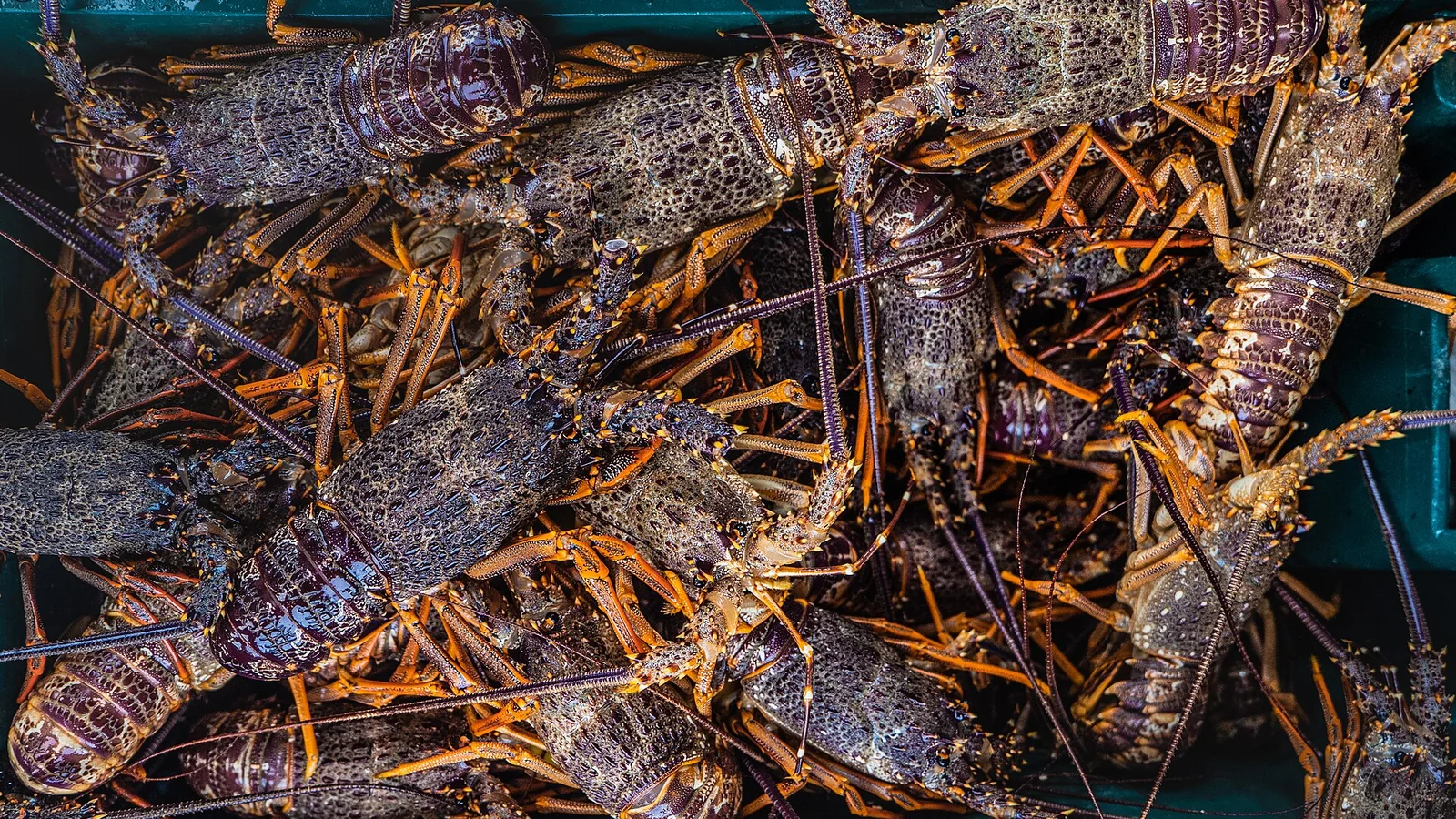
Southern rock lobster (Jasus edwardsii) in Kaikōura, New Zealand — image by Roady / Destination Kaikōura, CC BY 4.0, via Wikimedia Commons.
Why Live Seafood Dies in Holding and Transport
A live animal in a tank is not in storage — it is still respiring, feeding and excreting. That has direct thermal consequences:
- Warmer water = faster metabolism. Metabolic rate rises with temperature, so a warm tank burns through oxygen and energy faster, and produces more ammonia.
- Warm water holds less dissolved oxygen. Just as oxygen demand climbs, the water's capacity to carry it falls — a double squeeze.
- Temperature swings cause shock. A rapid change in temperature stresses animals far more than a stable temperature outside the ideal range, weakening them exactly when they are about to be handled, packed and flown.
Cooling is the master lever here because it acts on all three problems at once: it slows metabolism, raises the water's oxygen-holding capacity, and damps the swings that trigger shock.
Depuration: Purging Bivalves Before Export
Depuration is the process of holding filter-feeding bivalves — mussels, oysters, clams — in clean, treated seawater so they purge microbes, silt and other contaminants before sale. It is a standard and often legally required step for bivalves harvested from coastal waters, and its effectiveness depends heavily on temperature.
Too cold, and the purge stalls. Bivalves only filter while they are physiologically active. Green-lipped mussels stay active from roughly 6 °C to 17 °C; Pacific oysters need at least about 8 °C to keep pumping — activity effectively stops near 5.5–6 °C. Below that, the animals simply close up, stop filtering, and depuration grinds to a halt.
Too warm, and quality bleeds away. Warm water speeds filtration but also forces the animals to burn their own energy reserves, and it can encourage re-contamination of the water. That is why industry guidance ties the length of the depuration period to water temperature: the run must be long enough to purge — typically 24–72 hours for bacteria, and longer for viruses — but not so long or so warm that the product degrades.
A chiller holds the tank inside the active-but-cool band so filtration keeps running at a controlled rate, day and night, without the quality loss that comes from overheating.
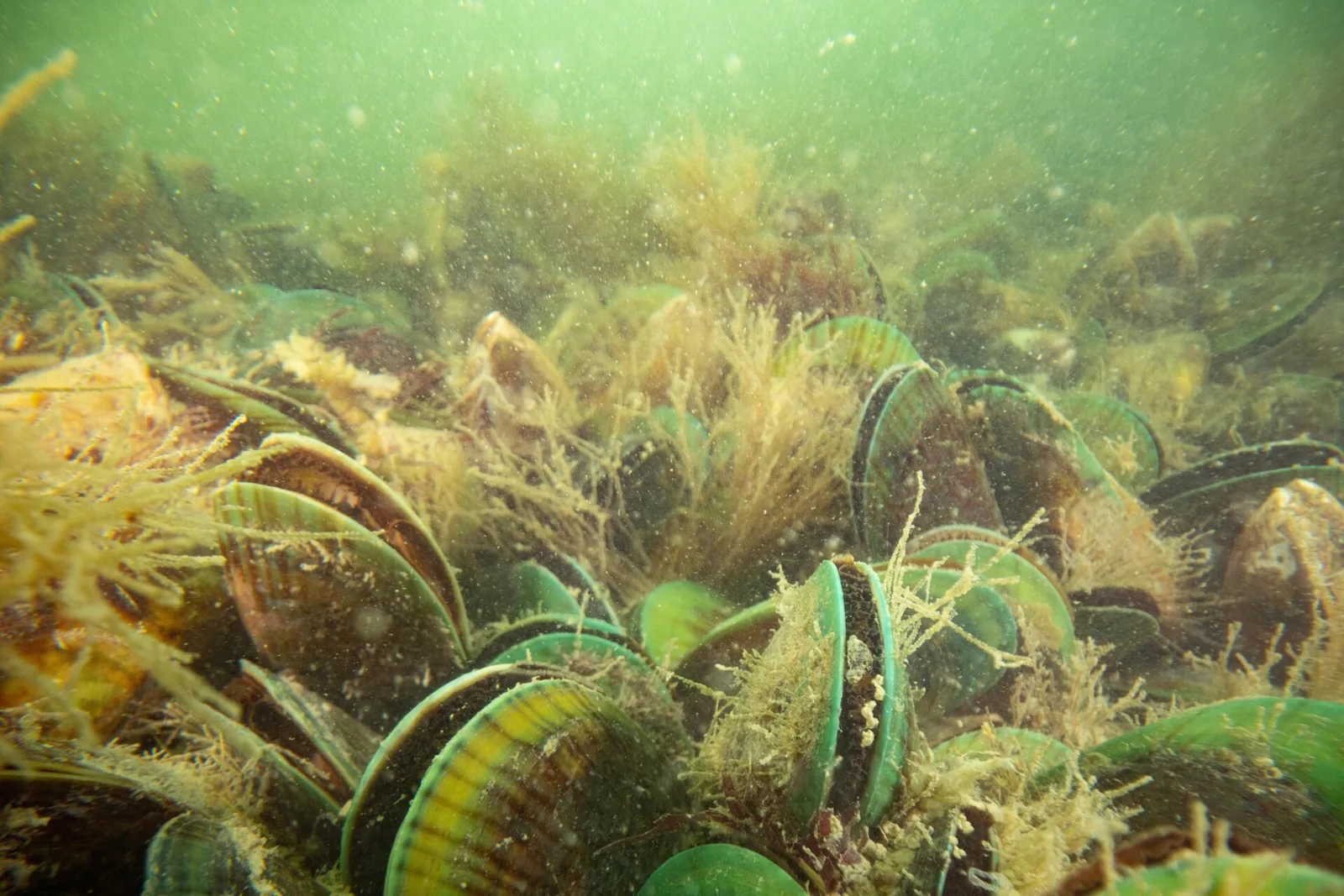
Green-lipped mussel (Perna canaliculus), Auckland, New Zealand — image by Shaun Lee, CC BY 4.0, via Wikimedia Commons.
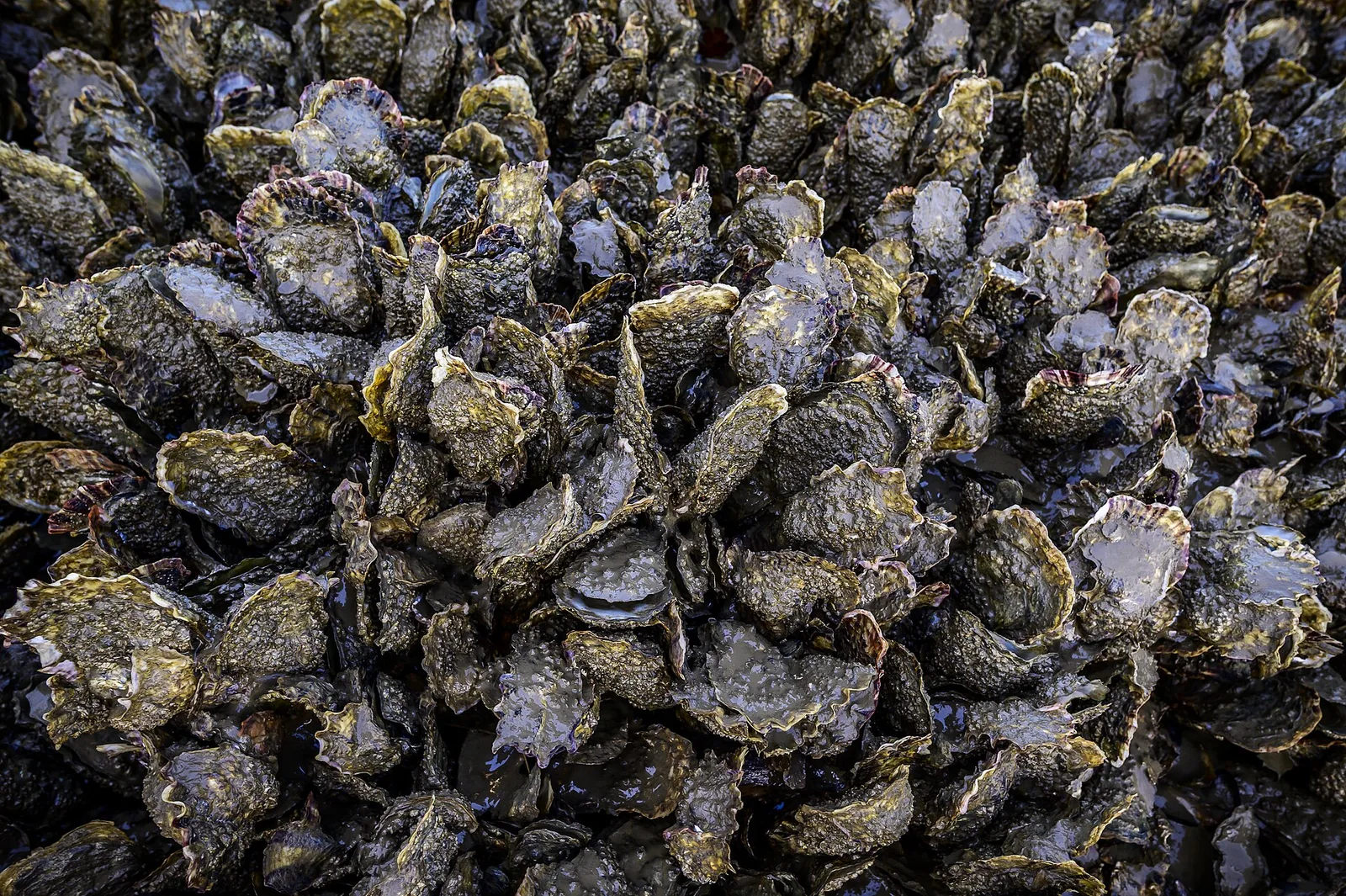
Pacific oyster reef (Magallana gigas) in the Wadden Sea — image by Stephan Sprinz, CC BY-SA 4.0, via Wikimedia Commons.
Pre-Air-Freight Chilling: The Dormancy Trick for Rock Lobster
Rock lobster is the star of live air freight, and it travels in a state no bivalve can manage: dormancy. When a southern rock lobster is gradually chilled to roughly 5–8 °C, it enters a dormant "cold coma" — respiration and activity fall sharply, and the animal can survive far longer out of water. Commercial exporters chill to around 6–7 °C before packing, and a properly chilled lobster can survive up to about 30 hours out of water in an insulated box with chilled gel packs or ice packs.
Two details decide whether this works:
- Cooling must be gradual. A slow pull-down lets the animal adjust and enter dormancy; a sudden cold shock or an overshoot below its tolerance can kill it outright.
- The box must hold the cold. Chilled lobsters packed into insulated containers stay viable because the temperature stays low through the flight — another reason the pre-chill has to be right, and stable, before the box is sealed.
Bivalves are different: mussels and oysters are shipped chilled and moist (near 0–4 °C), not dormant. They tolerate the cold, but they must not dry out or freeze. The shared requirement is the same — a controlled, steady pull-down to a species-appropriate low temperature.
| Species | Key temperature facts for live handling |
|---|---|
| Green-lipped mussel (Perna canaliculus) | Feeds and stays active from roughly 6 °C to 17 °C; stops filtering below ~6 °C |
| Pacific oyster (Magallana gigas) | Needs at least ~8 °C to keep filtering; activity stops near 5.5–6 °C |
| Southern rock lobster (Jasus edwardsii) | Chilled to ~5–8 °C it enters a dormant "cold coma"; survives ~30 h out of water |
Why Seawater Demands a Titanium Chiller
Every fluid in this process is corrosive, continuously circulating seawater — the harshest fluid in industrial cooling. An ordinary copper or aluminium exchanger will pit and fail within months, and worse, it can leach metal ions into the water and poison the very animals you are trying to keep alive.
That is why Delin builds its seafood constant temperature machines around a pure Grade 2 titanium heat exchanger that is inert in saltwater and never contaminates the tank. Beyond the exchanger, three things matter for live holding:
- ±0.5 °C control accuracy — the precision that turns a stress-inducing swing into a steady, safe set-point.
- Continuous-duty compressors (Copeland / Emerson / Panasonic) rated for 24-hour, 365-day operation, because live animals never take a day off.
- A +5 °C to +35 °C working range that covers both cold depuration set-points and warmer species holding.
Where Precision Cooling Pays — and Where It Doesn't
Precision cooling earns its keep wherever survival is the product — depuration and holding tanks for mussels, oysters and clams, live lobster and abalone holding, and the pre-air-freight chill-down that protects a premium consignment. There, a few degrees held steady across days of holding and a final pull-down is the difference between a profitable shipment and a total loss.
It does not pay where the animal is already dead and the goal is simply chilling product on ice or in a cold room. For that, a conventional ice or cold-storage system is the right tool. The rule is the same as anywhere in aquaculture: match the equipment to the margin — cool the stage where each degree of survival is worth real money.
Sizing a Chiller for Holding and Depuration
Sizing depends on water volume, stocking density, ambient temperature, target set-point and required pull-down rate — not on tank size alone. A single depuration or display tank may need only a compact 1 HP unit, while a large processing or export facility runs a 30 HP machine or several units in parallel.
Delin seafood constant temperature machines span 2.8 kW to 85 kW (1–30 HP), hold ±0.5 °C between +5 °C and +35 °C, and ship for 220 V/50 Hz single-phase or 380 V/50 Hz three-phase power. As the manufacturer, Delin ships an MOQ of just 1 unit — standard models within 15–25 days, customized capacities within 25–40 days.
For a deeper look at cooling for New Zealand live holding, see our Pāua abalone chiller guide, and for the wider selection picture, our seafood cooling system guide.
Send us your tank volume, stocking plan, water type and target temperature — our engineers will calculate the heat load and recommend the exact capacity. Request a quote.