High-Density Shrimp Farming Temperature Control: Optimal Water Temperature & Chiller Selection for Whiteleg Shrimp
Whiteleg shrimp (Litopenaeus vannamei) grow fastest at 28–32 °C, stop feeding below 18 °C and die below ~9 °C. Here is how precise temperature control in high-density farming lifts survival, growth and feed conversion — and how to size an aquaculture chiller for it.
Whiteleg shrimp (Litopenaeus vannamei), also called Pacific white shrimp, has become one of the most widely farmed shrimp species in the world. It grows fast, tolerates a wide salinity range, and thrives on lower-protein feed than many other species — which is why high-density and indoor intensive farming have adopted it so quickly.
But as stocking density rises, farmers keep running into the same hard truth: beyond a steady supply of dissolved oxygen, water temperature is the variable that decides survival, growth, and final profit. A few degrees of drift at the wrong moment can erase a season's margin. This guide explains whiteleg shrimp's thermal physiology, why temperature swings are so expensive in high-density systems, and how a correctly sized aquaculture chiller keeps the water in the profitable zone.
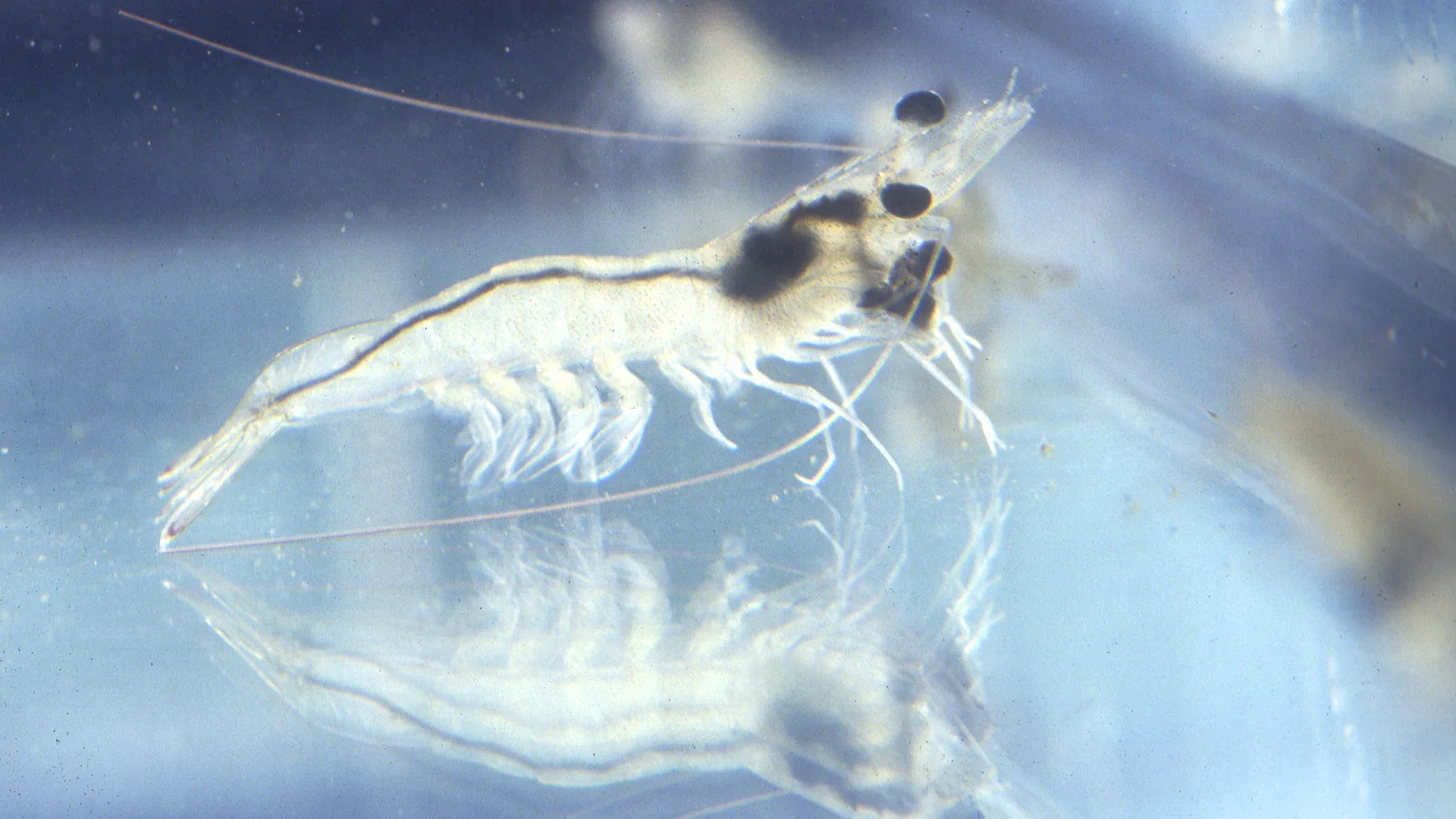
The Thermal Physiology of Whiteleg Shrimp
Whiteleg shrimp is a tropical species native to the Pacific coast of the Americas. In nature it lives in warm water, and in high-density culture its physiology is sharply temperature-dependent.
The golden growth range: 28–32 °C
Inside this band, metabolism is highest, growth is fastest, and feed conversion ratio (FCR) is at its best. The precise optimum shifts with body size — experimental data shows that ~1 g juveniles grow fastest at about 30 °C, while 12–18 g shrimp do best around 27 °C. A temperature-control system that holds a set-point instead of drifting with the weather is what turns that optimum into a repeatable result.
Cold stress: feeding stops below ~18 °C, mortality below ~9 °C
- Below 18–19 °C, appetite drops sharply or stops entirely, physiological function is suppressed, and growth effectively halts.
- Below about 9 °C, the shrimp's immunity collapses and mass mortality begins. (Some studies report mortality already below 12–13 °C, depending on size and acclimation history.)
Heat stress: above 33–35 °C, with an upper lethal limit near 43.5 °C
- Above 33–35 °C, the shrimp is under severe stress and disease resistance falls sharply; warm water also holds less dissolved oxygen.
- The upper lethal limit under gradual warming is reported around 43.5 °C — a sudden heat event can wipe out an entire pond.
| Temperature band | Effect on whiteleg shrimp |
|---|---|
| 28–32 °C | Optimal growth: fastest growth and best feed conversion |
| ~30 °C (~1 g juveniles) / ~27 °C (12–18 g) | Size-dependent growth optimum |
| 18–19 °C and below | Feeding slows or stops; growth halts |
| Below ~9 °C | Immunity collapses; mass mortality begins |
| 33–35 °C and above | Severe heat stress; disease resistance drops; dissolved oxygen falls |
| ~43.5 °C | Upper lethal limit under gradual warming |
Why Temperature Swings Are So Costly in High-Density Farming
High-density and intensive systems carry a very high biomass in every cubic metre of water, which makes temperature instability far more expensive than in extensive ponds.
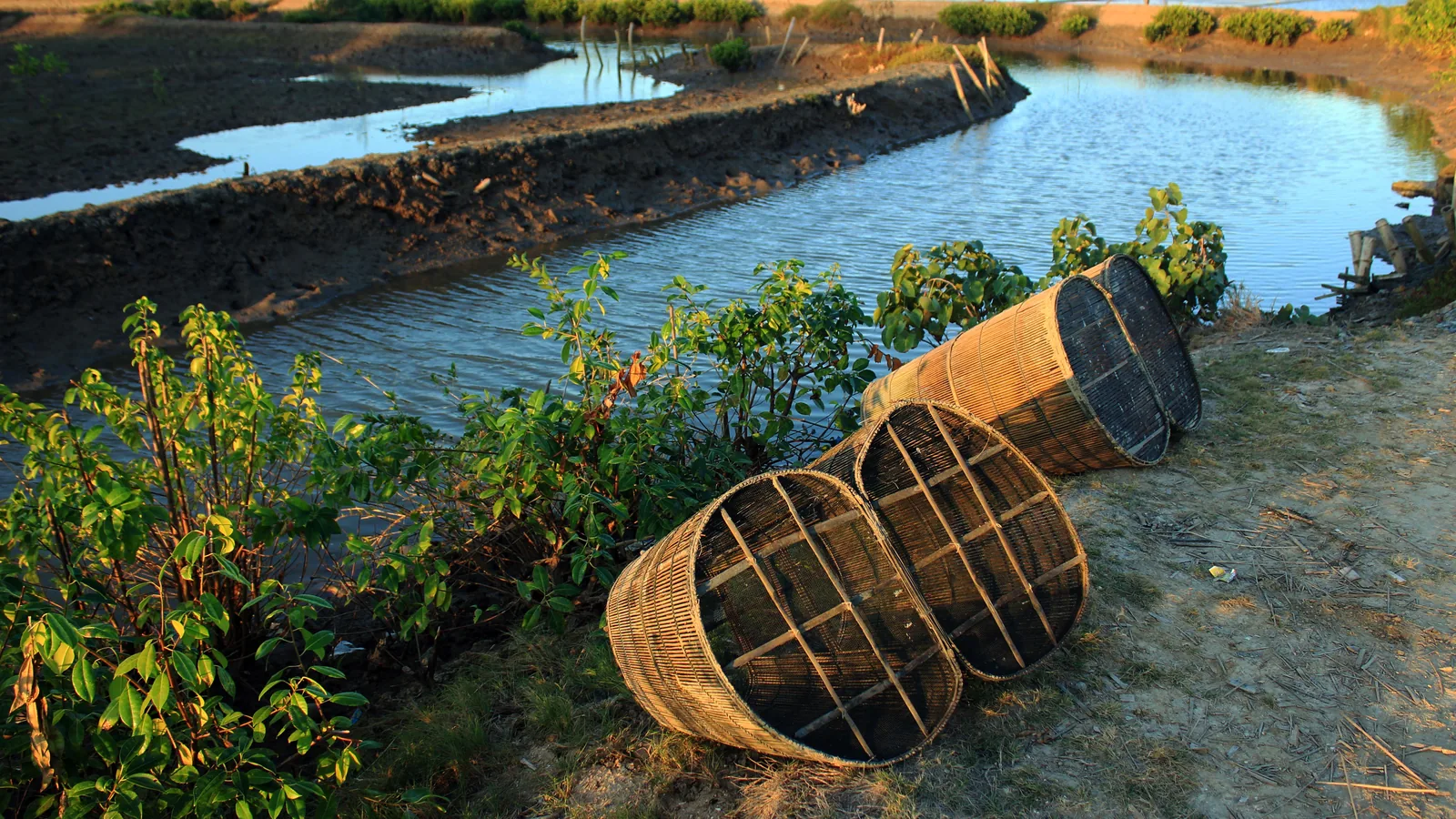
Shrimp farm in Madura, Indonesia — image by Vebra, CC BY 3.0, via Wikimedia Commons.
Rapid swings mean strong stress. Day–night temperature differences, rainstorms, and seasonal transitions can shift water temperature quickly. Whiteleg shrimp respond to fast change with a strong stress reaction — feeding drops, and disease has an easier time getting established.
Molting multiplies the risk. Whiteleg shrimp molt repeatedly through their lives: juveniles every few days, adults roughly every 2–3 weeks. The molt is the most fragile moment of the cycle — the shrimp is soft-shelled, easy to damage, and prone to cannibalism and disease. A sharp temperature change during molt is exactly when losses concentrate.
Keeping water temperature steady and inside the optimum band is therefore the cheapest insurance a high-density farm can buy against molting losses and stress-related disease.
Why High-Density Farms Run a Chiller
For a large, high-density farm, relying on the weather is a large and unnecessary risk. A dedicated aquaculture chiller has become standard equipment in modern intensive systems for three reasons.
1. Cool summer water back into the golden zone. In hot weather, pond or greenhouse water easily pushes past the 33–35 °C danger zone. A properly sized chiller pulls the water back to 28–32 °C and holds it there, instead of letting the pond ride the heat.
2. Stabilize the water and improve feed conversion. Constant temperature keeps shrimp feeding steadily, shortens the grow-out cycle, and lowers FCR. Stable conditions also support a more consistent microbial community in the water.
3. Work with aeration to maximize dissolved oxygen. Cooler water holds more dissolved oxygen. A chiller and an aeration system work together — the chiller lowers temperature so the water can carry more oxygen, exactly what dense stocking demands.
Where Precise Temperature Control Pays — and Where It Doesn't
Temperature control gives the biggest return in recirculating and intensive systems — RAS loops, indoor tanks, greenhouses, and nursery or high-value grow-out — where the water volume is manageable and every degree of survival and growth is worth real money.
In a large, low-density extensive pond, cooling the entire water body is usually not economical: the volume is enormous and the marginal gain per kilogram is small. For those farms, the practical answer is often partial cooling, cooling the nursery or the most valuable phase, or managing temperature through water exchange and aeration first. The point is to match the equipment to the system — not to cool water for its own sake.
Sizing a Chiller for Shrimp Farming
Whiteleg shrimp is a marine species, so any chiller in direct contact with the culture water must resist seawater corrosion without contaminating the water. Delin builds its aquaculture chillers around a pure Grade 2 titanium heat exchanger that is inert in saltwater and never releases metal ions into the water.
For high-density shrimp systems, Delin's aquaculture water chillers run from 2.8 kW to 85 kW (1–30 HP), hold temperature to ±0.5 °C across a +5 °C to +35 °C working range, and scale to farm size by running several units in parallel. Correct sizing depends on system volume, stocking density, ambient temperature, and target set-point — not tank size alone.
For the nursery and hatchery stage, which is even more temperature-sensitive, see our shrimp hatchery chiller sizing guide and the fish hatchery and nursery chiller guide.
Send us your pond or tank volume, stocking density, water type, and target temperature. Our engineers will calculate the heat load and recommend the right single unit — or a bank of parallel units for a large farm. Because Delin is the manufacturer, MOQ is just 1 unit, standard models ship within 15–25 days, and customized capacities within 25–40 days. Request a quotation.