Small Water Chiller Applications: Summer Cooling, Spawning Control & Seahorse Breeding
A small, low-noise water chiller does far more than keep an aquarium comfortable — it holds ornamental fish through hot summers, times broodstock spawning by temperature, and cools delicate seahorse breeding tanks.
A small water chiller — the 1–5 HP class — is easy to underestimate. Most people think of it as a way to keep a display tank from overheating in summer. It does that, but it also does something more valuable: it turns water temperature into a precise control tool for breeding and for keeping the most delicate animals alive. Here are three applications where a compact, low-noise chiller earns its place.
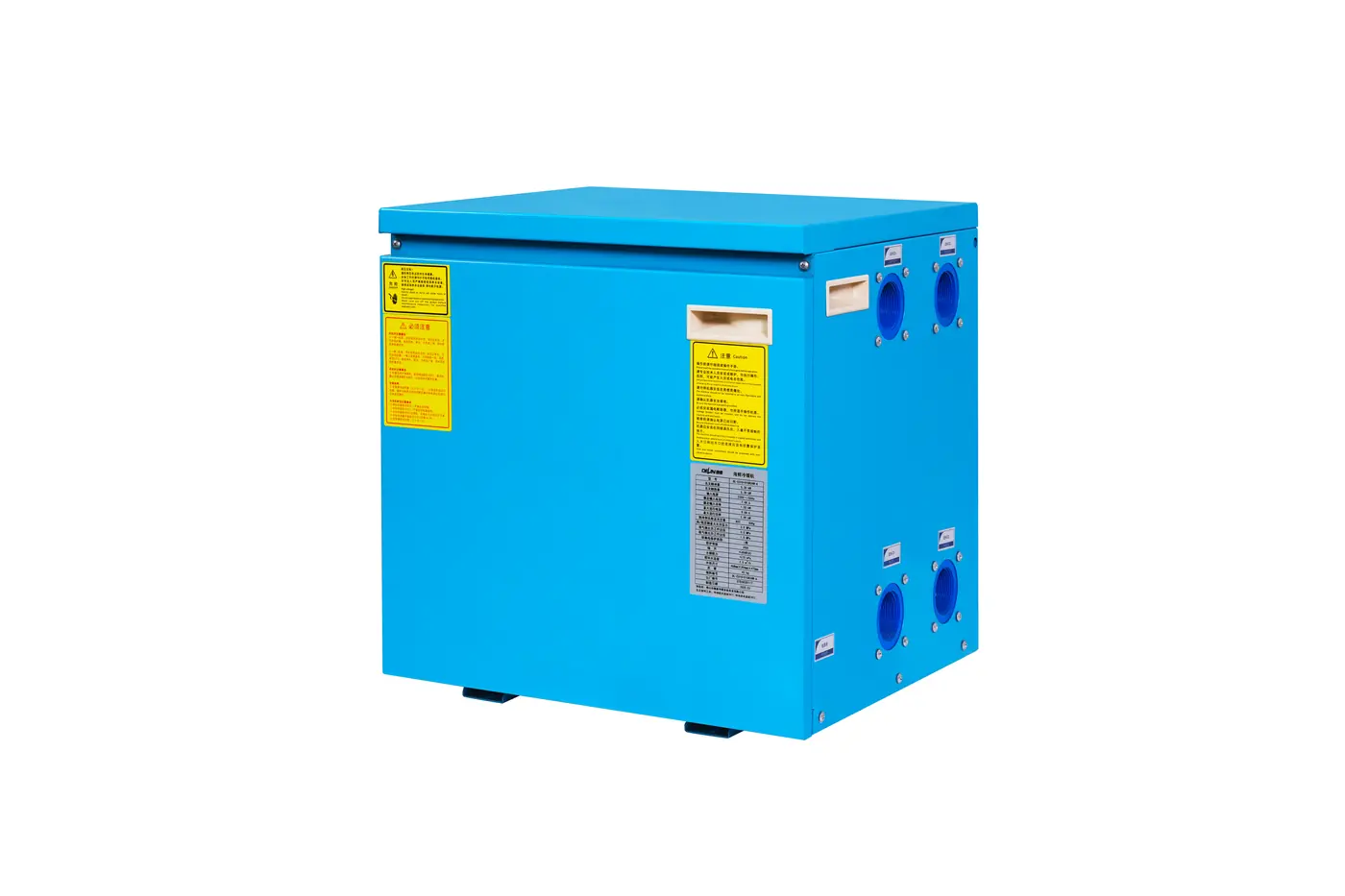
1. Ornamental Fish Summer Cooling
In a heatwave, the water temperature in an un-cooled tank or pond climbs with the air. Tropical species start to suffer above about 28 °C, and temperate fish such as koi and goldfish are happiest at 15–20 °C — far below a hot summer afternoon. Warmer water also holds less dissolved oxygen, exactly when a stocked tank is consuming more.
A small chiller holds the whole body of water at a safe set-point through the hottest weeks, which is often the difference between a display that survives summer and one that does not. For heat-load math and sizing, see our ornamental fish aquarium chiller guide.
2. Temperature-Controlled Spawning
Many fish use temperature as the calendar that tells them when to breed. Koi and goldfish, for example, spawn as the water warms toward roughly 18–22 °C in spring. That means a breeder with precise temperature control can hold broodstock and time the spawn deliberately — instead of waiting for the weather to decide.
A chiller with ±0.5 °C control lets you manage the cooling side of that cycle in warm conditions: hold broodstock in a non-spawning band, then step the temperature to the trigger point when you want the spawn, and bring it back down afterward. In hot climates, where summer water temperatures would otherwise run too high all season, a small chiller is what makes a controlled spawning season possible at all.
3. Seahorse Breeding
Seahorses are where a small, quiet chiller becomes essential rather than optional. They are slow swimmers, delicate feeders, and highly prone to stress — and some of the most valuable species are cold-water animals.
The big-belly seahorse (Hippocampus abdominalis), for example, is a temperate species native to the cool coastal waters of southern Australia and New Zealand, and it is usually kept around 16–18 °C. In most homes, fish rooms, and breeding facilities that is colder than ambient — so holding it requires a chiller, not a heater. Tropical seahorses kept at 24–26 °C need the same stability.
Three things matter in a seahorse tank, and a small low-noise chiller delivers all of them:
- Stable temperature. Seahorses have little tolerance for swings; a drift of a degree or two stresses them and invites bacterial infection. ±0.5 °C control holds the band.
- Gentle, quiet environment. Seahorses are easily exhausted by strong flow and disturbed by vibration and noise. A machine under 55 dB that can be plumbed on a gentle loop suits them far better than an industrial unit.
- Clean water. A pure Grade 2 titanium heat exchanger never releases metal ions into the tank — important for animals as sensitive as seahorses.
Why a Small Chiller, Not a Big One
For tanks and breeding systems from a few hundred litres up to around ten thousand litres, a small unit is the better tool:
- Quiet. Under 55 dB, it can sit beside a fish room or breeding rack without adding stress.
- Compact. A 1–5 HP footprint fits where an industrial machine cannot.
- Precise. ±0.5 °C control, across a +5 °C to +35 °C working range, covers both cold-water and tropical set-points.
- Built for continuous duty. Copeland, Emerson and Panasonic compressors and a titanium exchanger are the same industrial-grade parts used in Delin's larger machines.
Capacities start at 2.8 kW (1 HP) and scale to 5 HP and beyond, so the machine is matched to the heat load rather than oversized.
Choose the Right Size
Sizing a small chiller depends on water volume, stocking density, ambient temperature, and your target set-point — not volume alone. Send us your tank or pond volume, water type, and target temperature, and our engineers will calculate the heat load and recommend the exact 1–5 HP model.
Planning a breeding program, or just trying to keep your fish safe through the next hot summer? Contact our engineering team — MOQ is just 1 unit, standard models ship within 15–25 days, and every machine carries a 24-month warranty.