High-Capacity Chillers for King Crab & Snow Crab RAS Farming: The Key to Scalable Cold-Water Aquaculture
Land-based RAS farming of king crab and snow crab depends on rock-solid water temperature between 2 °C and 6 °C. Here is why a high-capacity, titanium-exchanger chiller is the difference between a profitable facility and lost stock.
Overfishing, tightening wild-catch quotas and unstable supply chains have squeezed the global supply of premium cold-water crustaceans. In response, land-based farming and long-term live holding of Russian king crab and snow crab in recirculating aquaculture systems (RAS) have become high-margin opportunities for commercial operators.
But moving a deep-sea, sub-arctic species indoors raises one make-or-break demand: rock-solid, ultra-stable water temperature. Holding high-value crab at commercial density without losing stock to heat stress takes an industrial-grade chiller built for cold water, high salinity and non-stop duty.
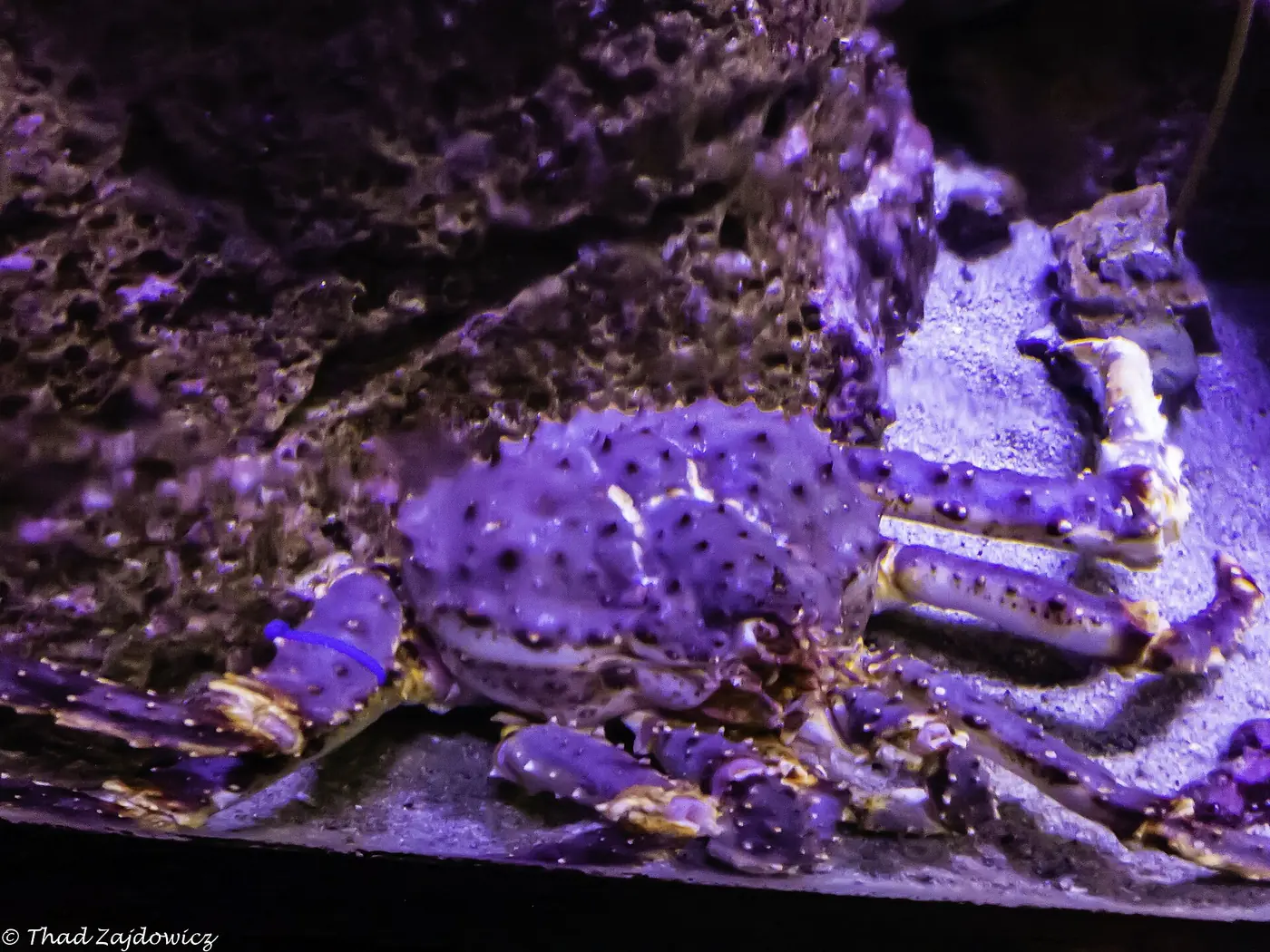
Why Temperature Control Makes or Breaks a Crab RAS
King crab (Lithodidae) and snow crab (Oregoniidae) are native to deep, sub-arctic water that never warms up. Replicating that indoors imposes three hard technical demands:
- Narrow thermal tolerance. Healthy feed conversion and successful molting require water held between 2 °C and 6 °C. Above roughly 8 °C, crabs suffer acute physiological stress, secondary bacterial infection and rapid mortality.
- Constant heat input. In a high-density RAS, submerged pumps, biofilters, room temperature and the animals' own metabolism all add heat continuously. Without serious cooling capacity, water temperature climbs fast.
- Seawater corrosion. High-salinity water corrodes copper and ordinary steel heat exchangers quickly — a leak here means refrigerant in the water and catastrophic loss.
What a Crab-Grade Chiller Needs
For a high-value cold-water crustacean facility, a chiller is not a commodity. Four features separate the right machine from the rest:
-
A pure titanium heat exchanger. Seawater is chemically aggressive; titanium is essentially immune to it. A pure Grade 2 titanium evaporator never corrodes and never leaches metal ions into the loop — protecting both the machine and the stock. We build these in-house, which is why our titanium evaporators are also sold as components worldwide.
-
High-capacity, efficient compression. Reaching and holding 2–6 °C under heavy flow takes high-displacement scroll or screw compressors. Staged, multi-compressor configurations match capacity to the live load, cutting energy use when thermal demand drops.
-
Precision control. A PID digital controller holds set-point within ±0.5 °C and raises an alarm on drift, so a slow warm-up is caught before it becomes a mortality event.
-
24/7 redundancy and protection. A cooling failure in a high-density crab shed can wipe out inventory in hours. The right machine carries multi-circuit redundancy, auto-restart, and full diagnostics — low-flow, high/low-pressure and freeze protection.
Built to Last: Why Durability Is the Real Spec
In a crab RAS the chiller runs around the clock in salt-laden, humid air for years. Durability is not a nice-to-have; it is the whole cost story. Delin builds for it:
- Industrial-grade Copeland and Hanbell compressors rated for continuous duty.
- Pure titanium exchangers that outlive the rest of the machine — no corrosion, no scheduled replacement.
- Anti-corrosion casing for humid, salt-laden plant rooms.
- Run-tested and pressure-tested in our Foshan factory before shipping — CE and ISO 9001 certified, SGS inspection on request.
- A 24-month warranty backed by the engineers who build the machines.
Quiet Enough for the Hatchery Floor
Indoor crab facilities run 24/7, and noise travels. Delin's seawater and marine line is engineered for indoor use and runs below 55 dB; the high-capacity industrial range pairs low-vibration scroll and screw compressors with optional sound-insulated enclosures, so a unit cooling 200 kW does not punish the people working beside it.
The ROI of Getting Temperature Right
- Minimized stock loss. Stable cooling removes thermal stress, preserves live weight and pushes survival rates to 95–98% in well-run facilities.
- Year-round supply. Holding live crab across the off-season captures peak pricing when wild supply drops.
- Lower operating cost. Variable-frequency drives and high-COP titanium chillers cut monthly power bills and shorten payback.
Size It for the Load, Not the Tank
Capacity spans 3.5 kW to 210 kW (1–60 HP) in air-cooled or water-cooled configurations, so a single machine — or a bank of parallel units — matches your heat load. Send us your system volume, flow rate, stocking density and target set-point, and our engineers will calculate the cooling capacity and recommend the exact model.
Planning a king crab or snow crab RAS, or upgrading a live-holding facility? Contact our aquaculture engineering team for a load calculation and a custom quote. Factory-direct MOQ is 1 unit, standard models ship within 15–25 days, and every machine carries a 24-month warranty.